
Exploring new places on Google Maps was inefficient and overwhelming for tourists and newcomers. Users had to sift through countless reviews and pins, while locals lacked a structured way to share curated, experience based recommendations.
Designed a “Guided Tours” feature that allows users to search for curated experiences such as food, beaches, or attraction assembled by locals. These pre made tours guide users through specific areas (e.g., “Beaches in Orange County”), delivering a streamlined, experience-driven way to explore.
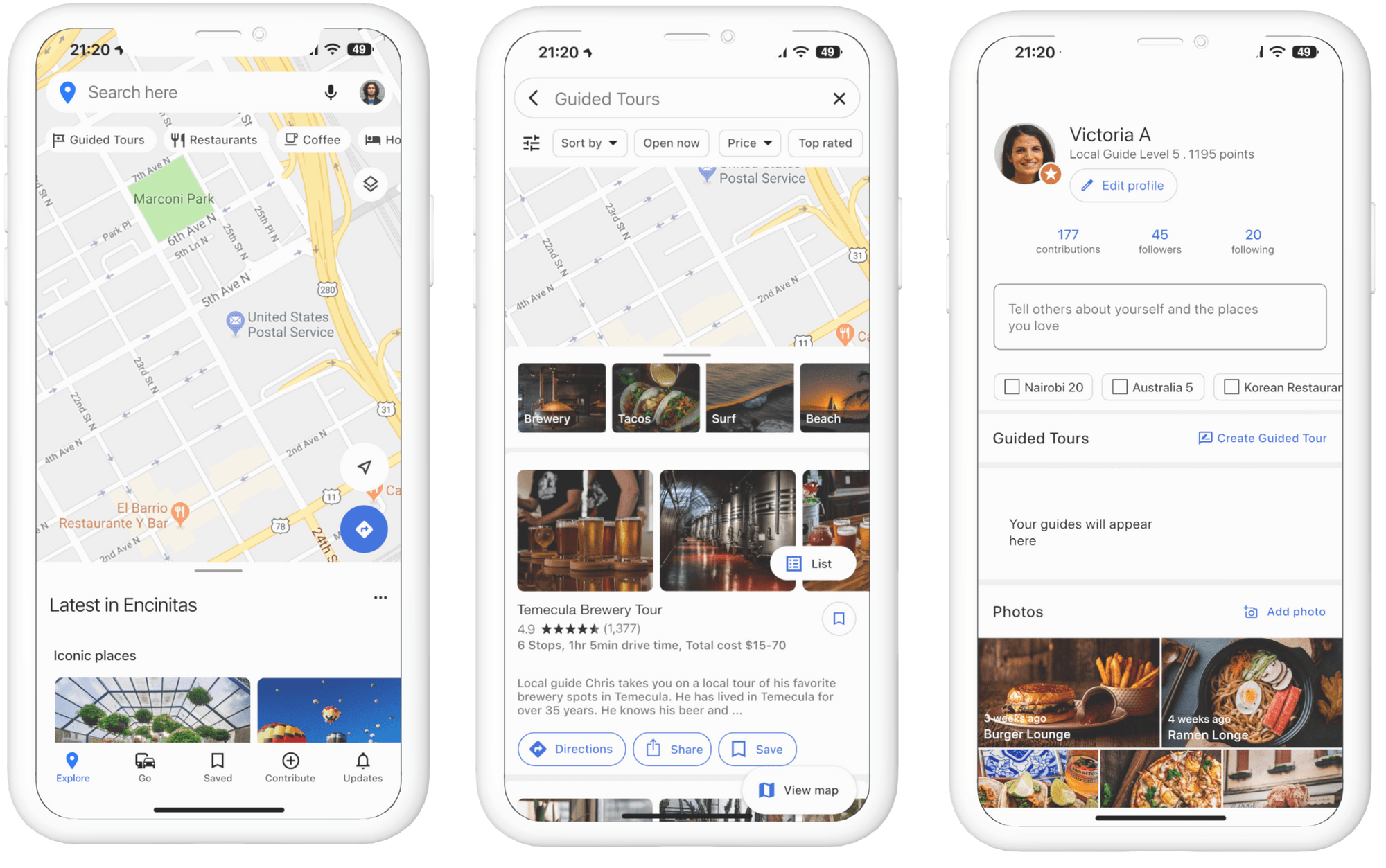
I began by identifying two main types of Google Maps users:
1. People who use Google Maps to check reviews before visiting a place or business
2. People who enjoy posting reviews and recommendations on Google Maps
I interviewed 7 locals who like showing people around their area and 5 non-locals from different regions who enjoy learning about new places when they travel. These two user groups represented both sides of the problem and helped me clearly understand their needs and pain points.
I conducted quantitative user research with locals and non-locals based on their Google Maps usage. I specifically selected users who actively search for recommendations and those who regularly post reviews. I chose quantitative research because it allowed me to ask a broader set of questions and uncover a wide range of user needs, expectations, and pain points.
I conducted quantitative user research with locals and non-locals based on their Google Maps usage. I specifically selected users who actively search for recommendations and those who regularly post reviews. I chose quantitative research because it allowed me to ask a broader set of questions and uncover a wide range of user needs, expectations, and pain points.
From my interview synthesis , I was able to create two personas and their user flows. One is The Explorer, who like to discover experiences from a locals perspective. The other is The Creator, who is a local and likes to create guided tour for explorers to use and enjoy.
User Flows for the Explorer and the Creator.
After researching Google Maps and defining my personas, the next step was to create the lo-fidelity wireframes to plan out the screens for the experience. I made sure to follow all of Google’s UI Design Patterns throughout my process.
I made two flows, one for the explorer persona and the other for the creator persona.
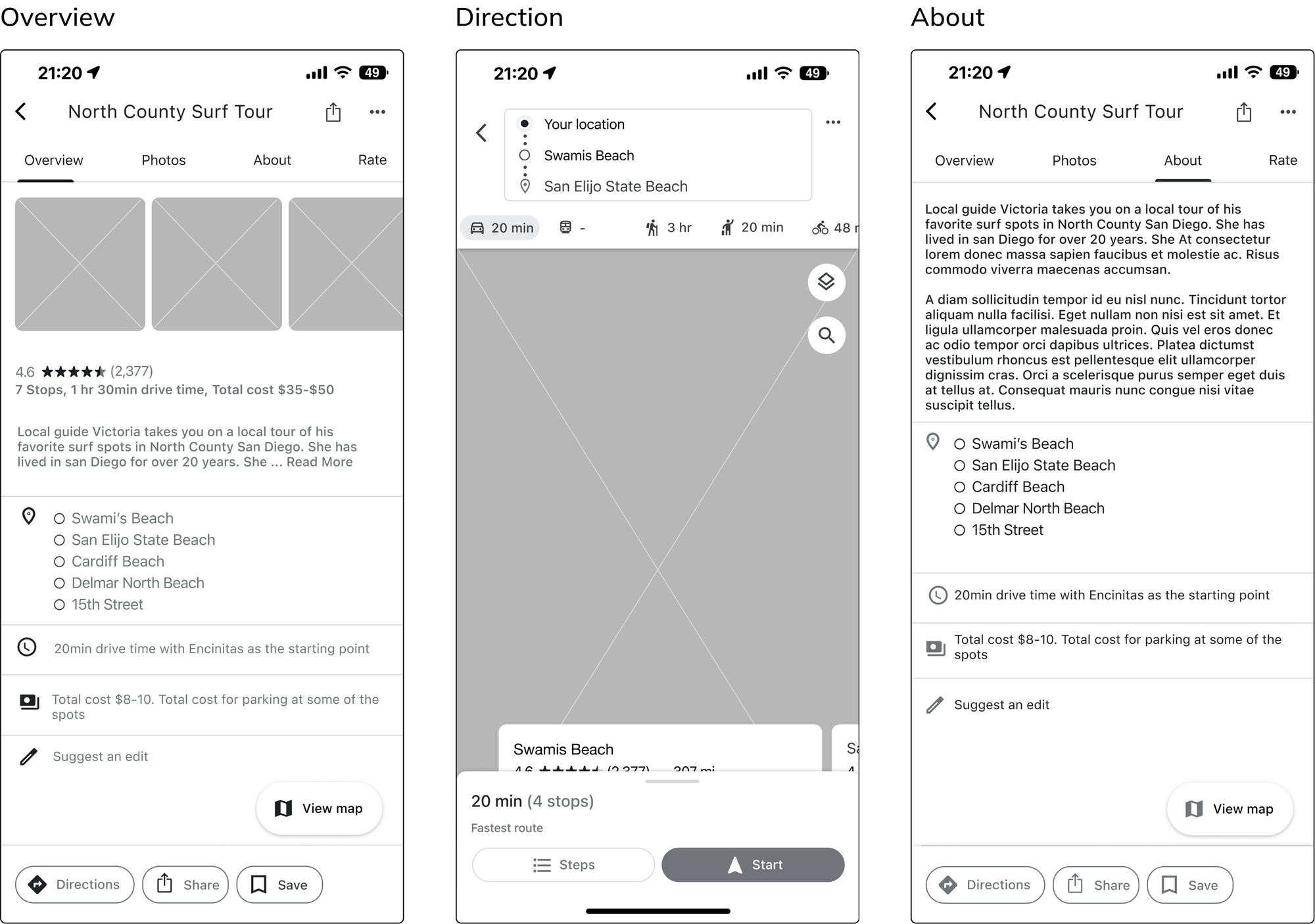

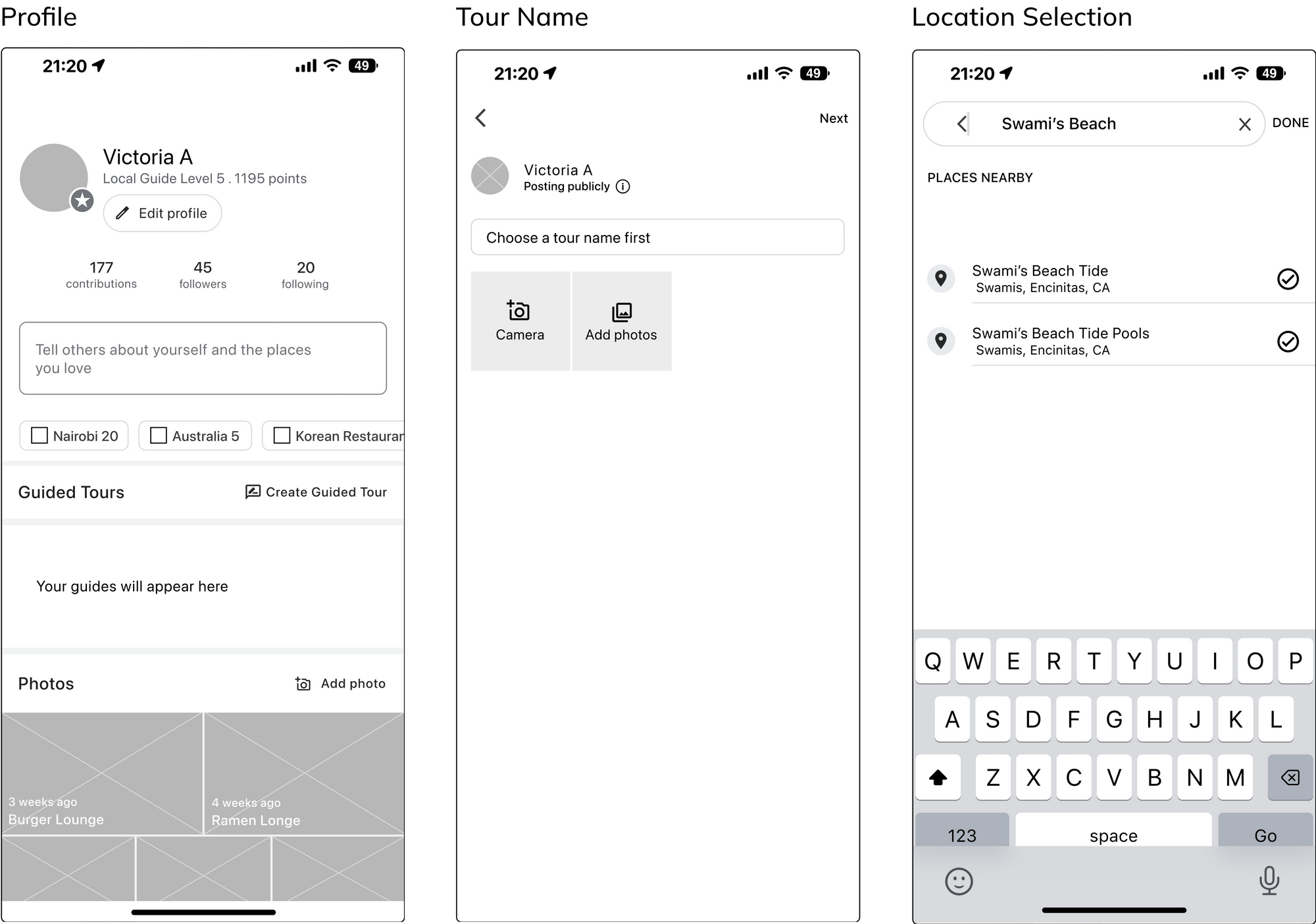
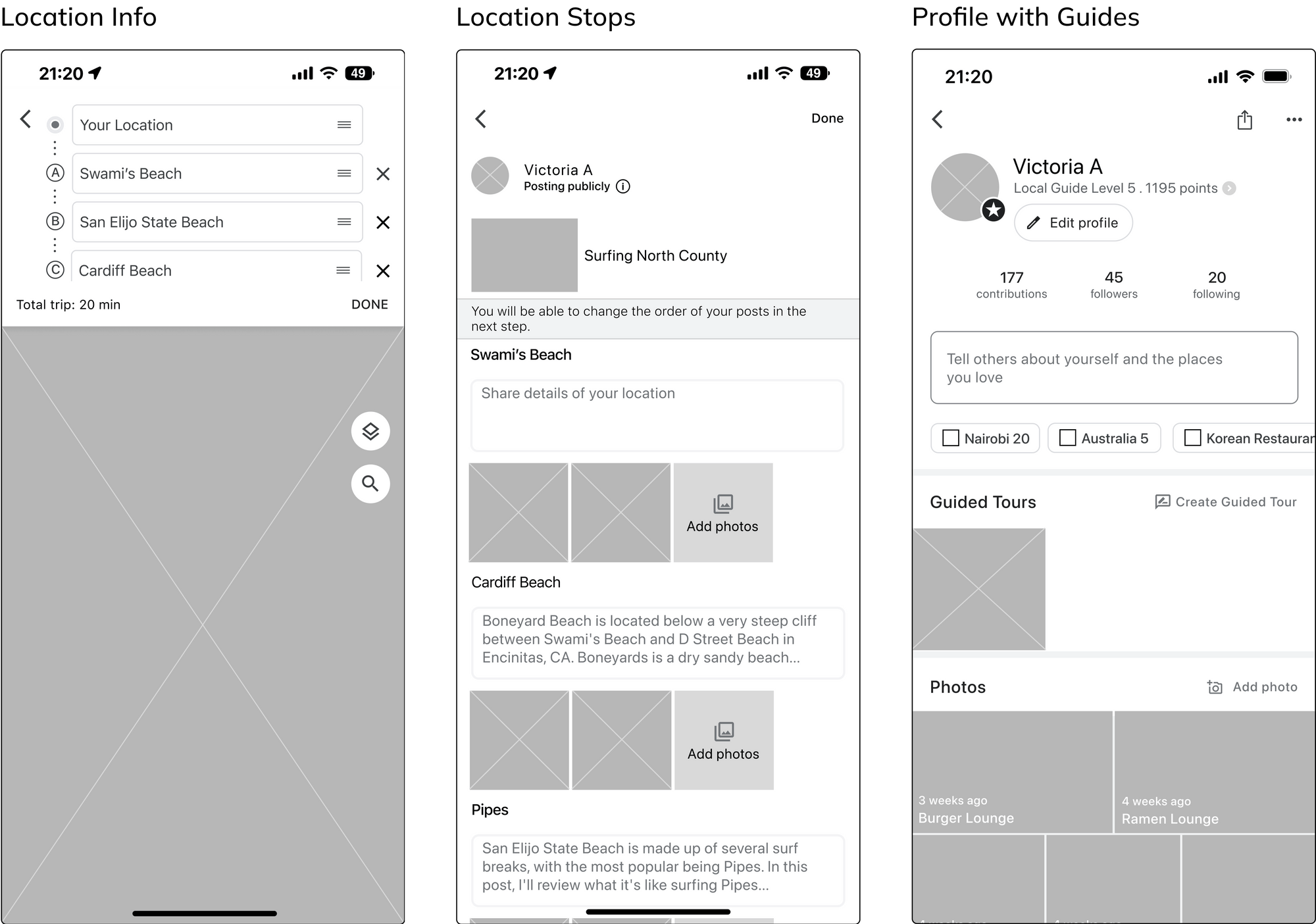
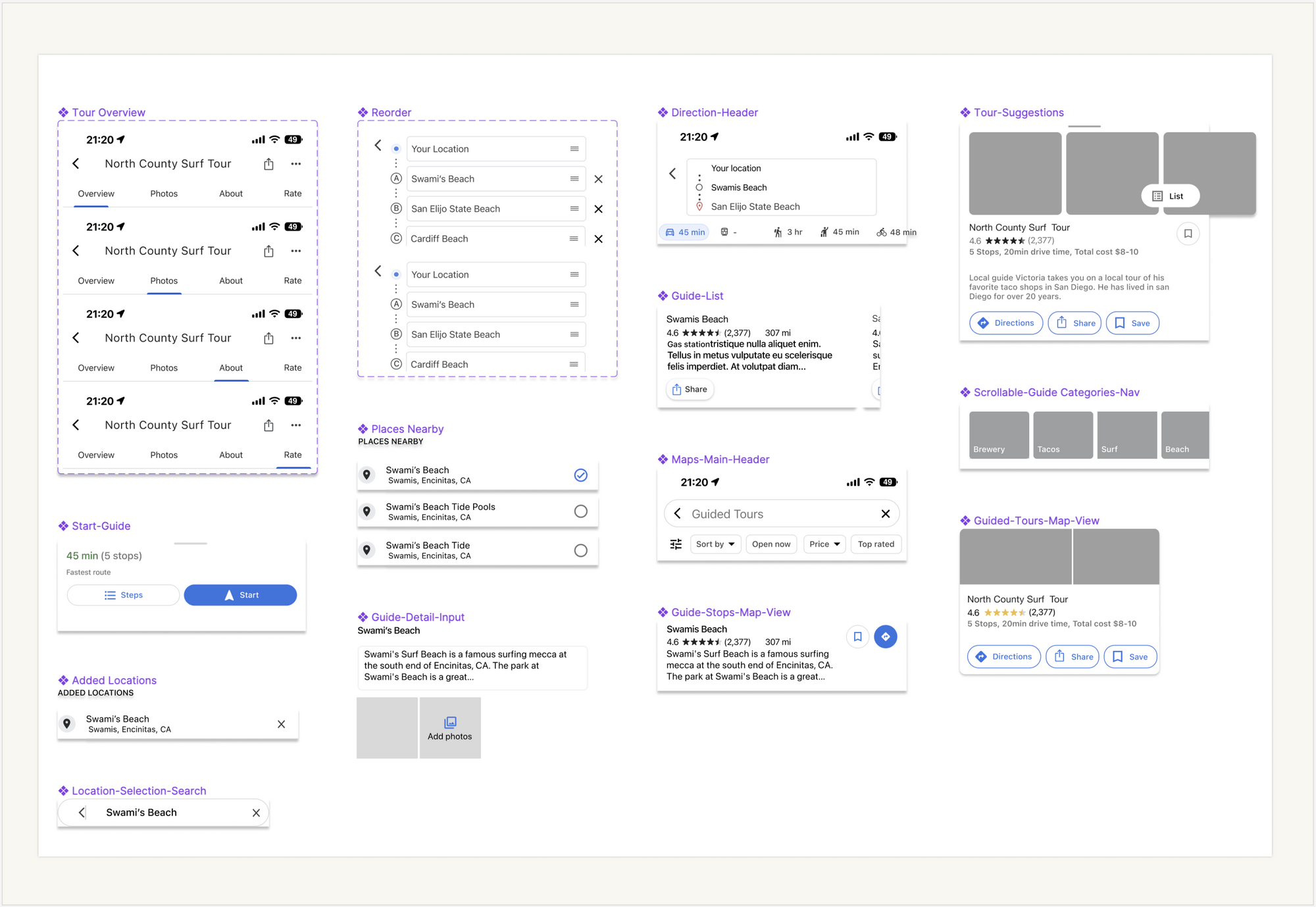
Iteration 1
I conducted User testing with 5 users using Maze and observed how they interacted with the app. During testing, I found that users were getting confused by the transition from 'Create Guided Tours' to Enter First Location. I identified the problem to be that, it was not intuitive for the user to click 'Create Guided Tours' and the first screen they see is 'Enter First Location'
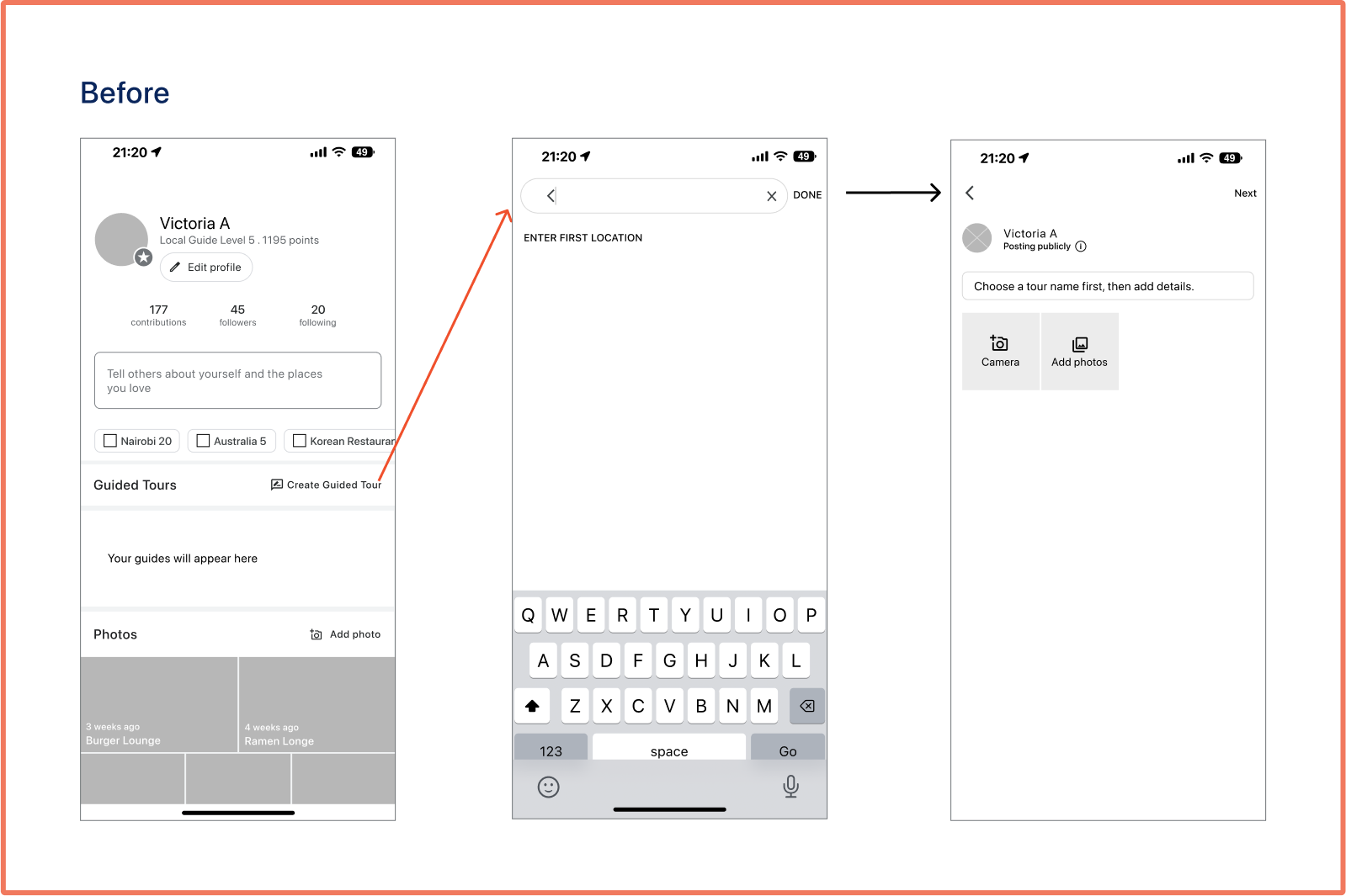
I decided to change the flow to ensure that it made more sense to the user by starting with 'Choosing a Name for the tour'
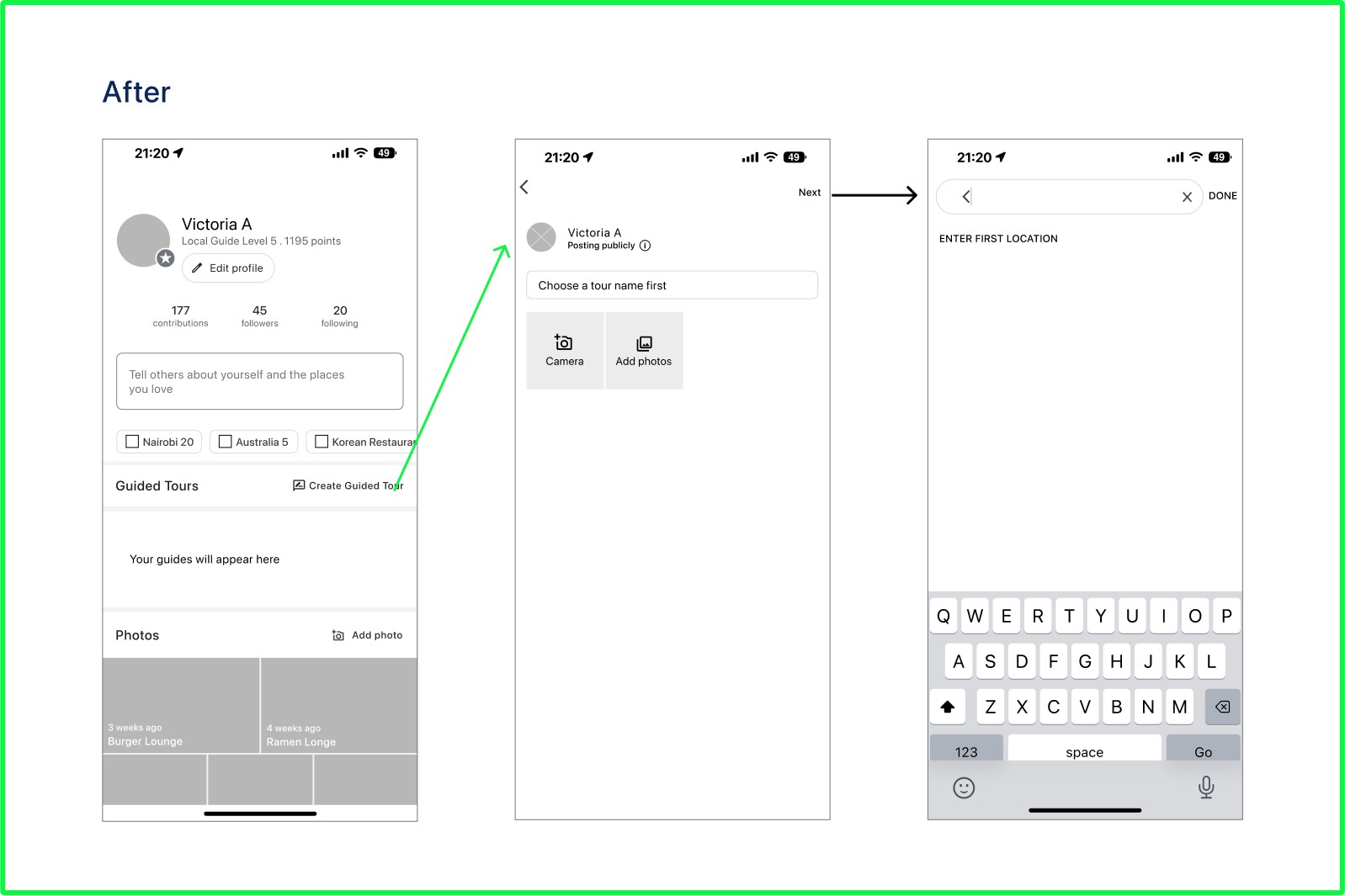
I conducted User testing with 5 users and observed how they interacted with the app and where there was need for iteration.
Iteration 2
During testing, some users expressed their dissatisfaction by the way their post order was after selecting all the locations. They attempted to go back and redo the location search in the order that they wanted the posts to appear. They did not know that they could change post order in the next step.There was no clear communication that it was possible in the coming steps.I made the change by clearly stating on the screen that the post order is possible in the next step.
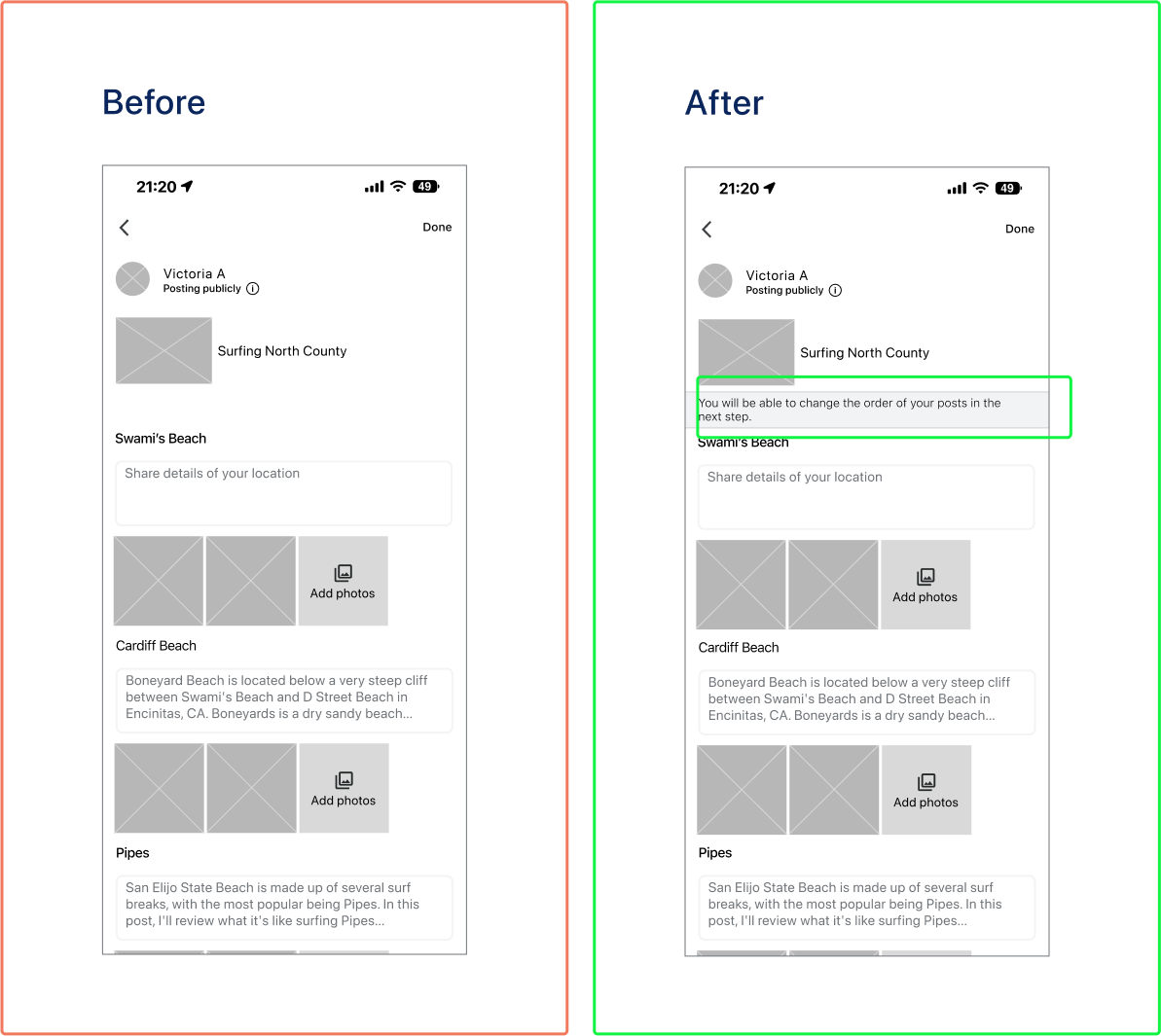
After the iterations, quantitative data from more user testing sessions showed a significant reduction in user confusion and increased satisfaction with the revised user flows. Qualitative feedback indicated improved usability and appreciation for the intuitive design. These improvements contributed to a more engaging and enjoyable user experience, aligning with the desired outcomes of the project.