Africanvas is a mobile-first marketplace designed to help talented East African artists showcase and sell their original artwork internationally — starting with the U.S. market. Many artists in Kenya currently rely on local galleries, expos, or word-of-mouth for exposure and sales, which limits their audience and opportunities. Africanvas creates a dedicated digital platform tailored to their needs, reducing barriers to international visibility and direct sales.
1. Artists lacked direct access to international buyers and visibility outside local channels.
2. Global art marketplaces rarely featured authentic East African work.
Africanvas provides a dedicated, mobile platform for East African artists to upload and sell original artworks directly to global buyers.
Helps bridge gaps in representation, accessibility, and monetization for underrepresented creatives.
Leverages research insights to create a platform that is culturally relevant and user-centered, aligned with the needs and behaviors of Kenyan artists.
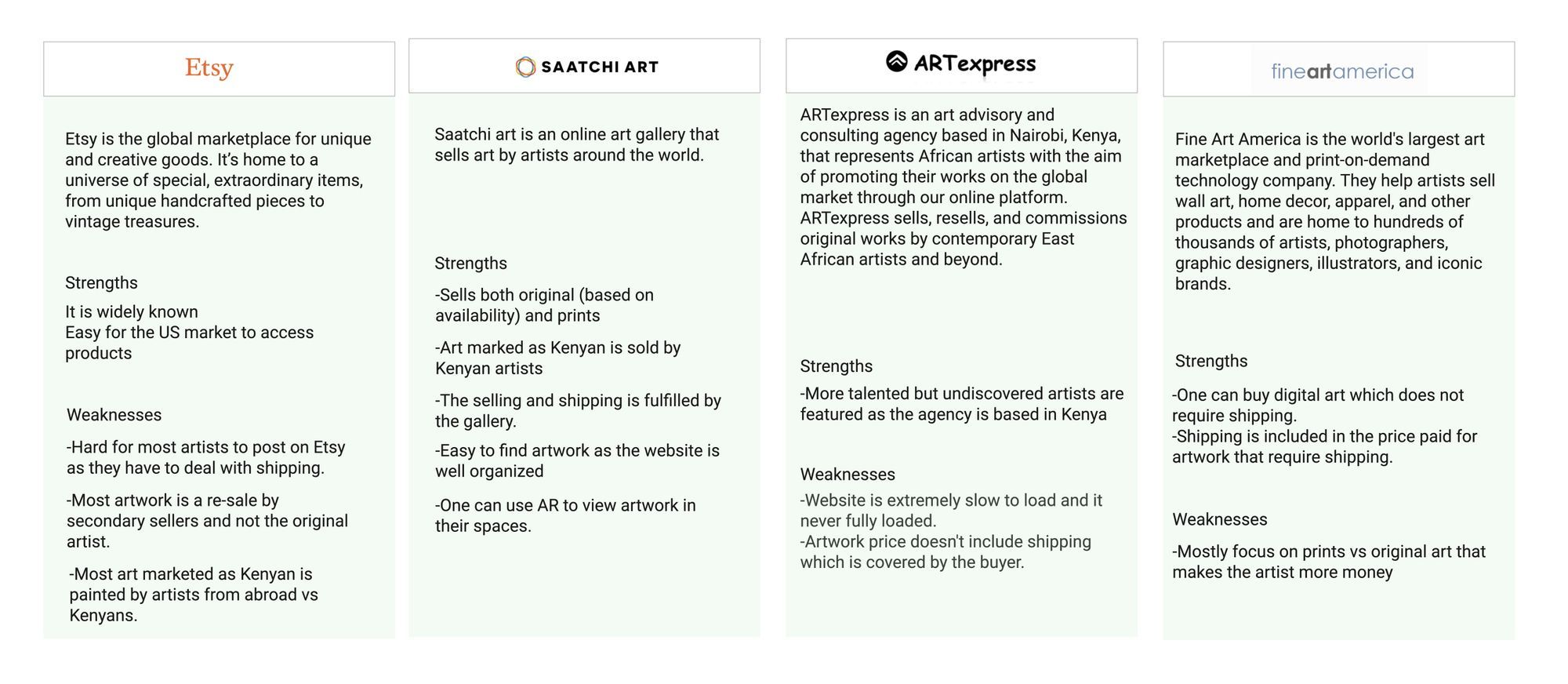
Secondary research was conducted to evaluate existing online art marketplaces and identify patterns in artist representation, content categorization, and discovery mechanisms. I reviewed multiple platforms to understand how “African Art” is labeled, surfaced, and sold, with a specific focus on the visibility of East African artists within these ecosystems.
This research surfaced a critical insight: although many platforms feature an “African Art” category, the majority of listed works are not created by East African artists. Instead, representation is often dominated by artists from outside the region. This mismatch between labeling and authentic representation revealed a systemic visibility gap and validated the core problem statement—East African artists lack equitable access to global digital marketplaces designed to support their work.
This insight directly informed the product direction, reinforcing the need for a purpose-built platform that prioritizes accurate representation, discoverability, and direct market access for East African artists.
Following insights identified during secondary research, I conducted primary qualitative research to validate assumptions and deepen understanding of the problem space. I recruited six Kenyan artists who had either sold artwork internationally or expressed interest in doing so. Participants were sourced through personal networks in Nairobi and outreach via Twitter.
I used a semi-structured interview format—working from a prepared discussion guide while allowing conversations to organically explore relevant experiences. This approach enabled deeper context gathering while ensuring consistency across interviews.
Through these interviews, I identified recurring pain points, behavioral patterns, and unmet needs, allowing the problem to be defined more precisely from the artist’s perspective.
Following insights identified during secondary research, I conducted primary qualitative research to validate assumptions and deepen understanding of the problem space. I recruited six Kenyan artists who had either sold artwork internationally or expressed interest in doing so. Participants were sourced through personal networks in Nairobi and outreach via Twitter.
I used a semi-structured interview format—working from a prepared discussion guide while allowing conversations to organically explore relevant experiences. This approach enabled deeper context gathering while ensuring consistency across interviews.
Through these interviews, I identified recurring pain points, behavioral patterns, and unmet needs, allowing the problem to be defined more precisely from the artist’s perspective.
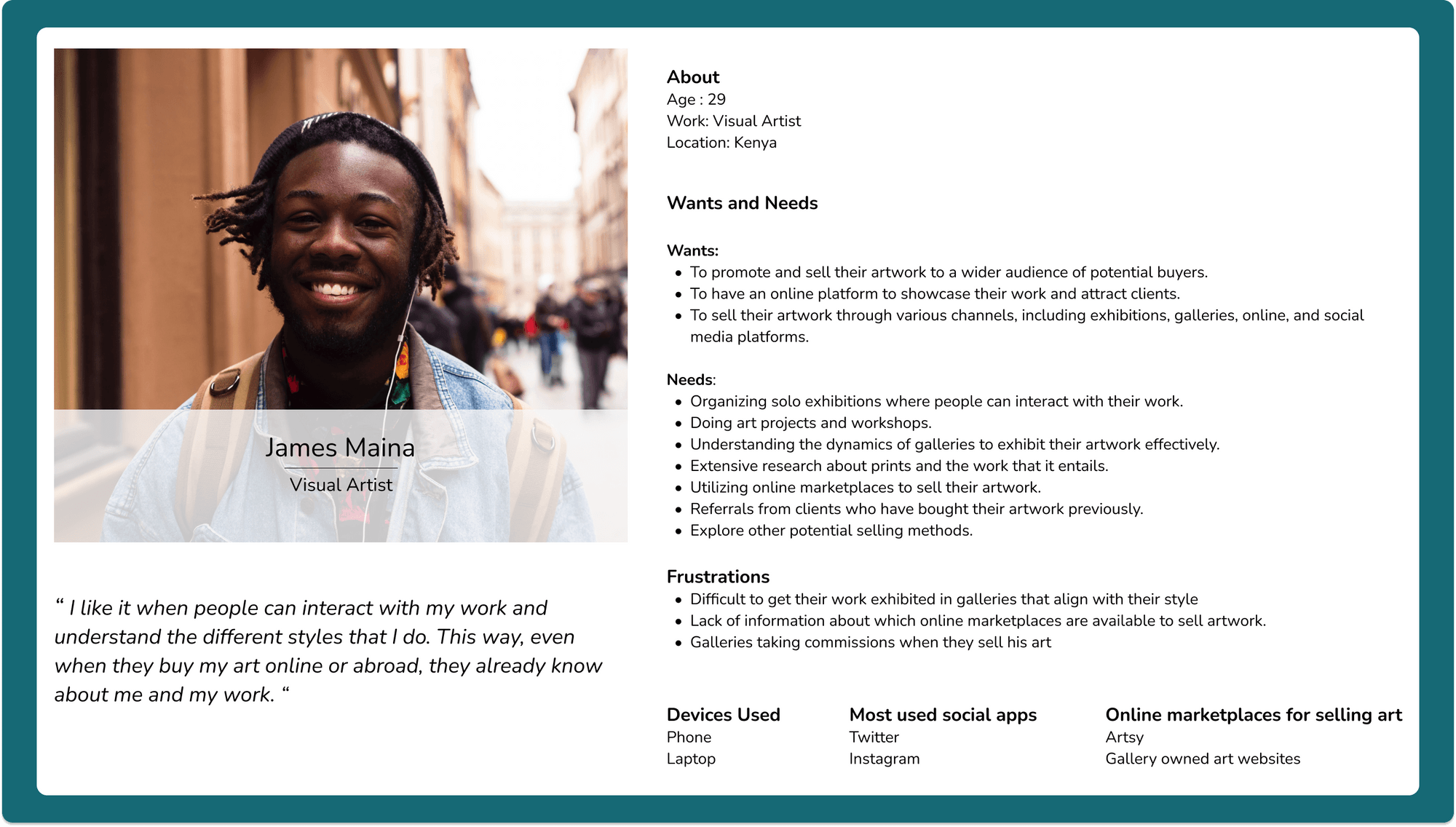
After completing the interviews, I synthesized the data using affinity mapping to cluster observations, behaviors, motivations, and pain points. This process revealed consistent themes around visibility, access to buyers, platform trust, and financial barriers such as gallery commissions.These insights informed the creation of a primary user persona.
James represents the core user: An East African artist seeking broader exposure, fair compensation, and accessible tools to sell artwork internationally without reliance on traditional galleries.This persona guided design decisions across the end-to-end experience, ensuring alignment with real user goals and constraints.
To maintain a user-centered focus throughout ideation and design, I defined a clear POV and translated key insights into How Might We statements:
-How might we help Kenyan artists exhibit artwork in galleries that align with their style, ensuring their work resonates with U.S. audiences?
-How might we empower East African artists to showcase and sell their work on an international stage using modern technology?
-How might we enable Kenyan artists to sell their artwork without excessive gallery commissions, allowing them to retain more value from their work?
These HMW statements framed opportunity areas and directly informed feature prioritization and UX flow design.
A key research insight revealed that East African artists often lack awareness of where—and how—to sell their work internationally, largely because existing platforms are not designed for them or representative of their context. The absence of a dedicated, trusted marketplace creates friction across discovery, payments, and logistics, preventing artists from accessing global buyers. Africanvas was conceived to directly address this gap.
By creating a platform purpose-built for artists from East Africa, the product establishes a clear entry point for showcasing authentic work in a space where artists feel represented. Enabling direct sales to U.S. buyers further reduces major barriers around international payments and shipping, simplifying what is typically a complex and inaccessible process for independent artists.
This insight informed the product vision and guided the definition of core features focused on visibility, ease of selling, and cross-border accessibility.
Based on research insights, I defined initial product requirements and prioritized features that supported the primary user goals:
-Discoverability of East African artworkLow-friction artist onboarding
-Simplified selling and fulfillment for international transactions
-Trust and transparency for both buyers and sellers
-These priorities shaped the MVP feature set and informed the overall information architecture.
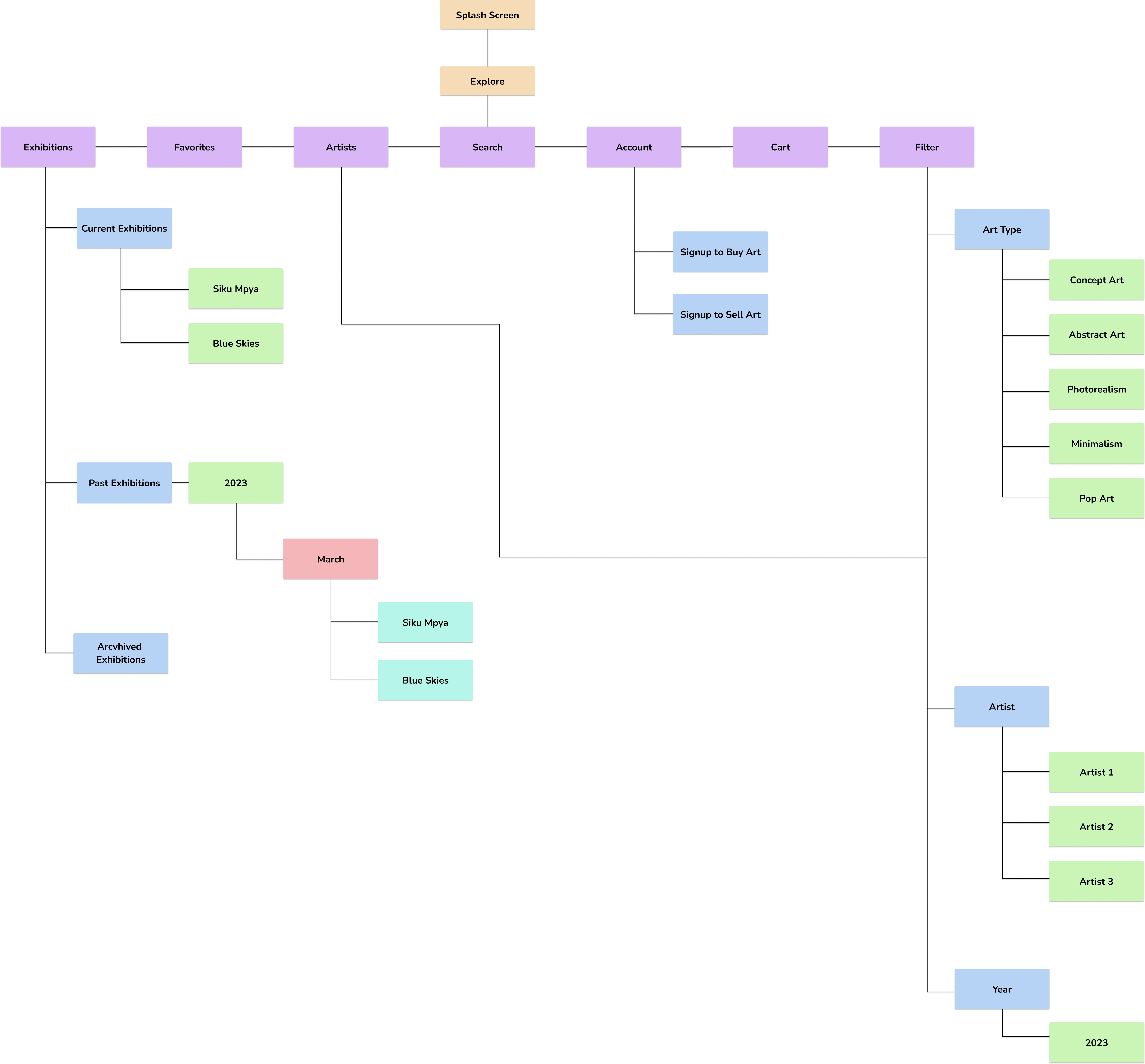
I created a sitemap to define the app’s information architecture and visualize how key features and screens connect across the experience. The sitemap helped ensure:
-Clear separation between buyer and artist journeys
-Logical grouping of core features
-Scalable structure for future product growth
This artifact served as a foundation for subsequent user flows, wireframes, and high-fidelity designs.
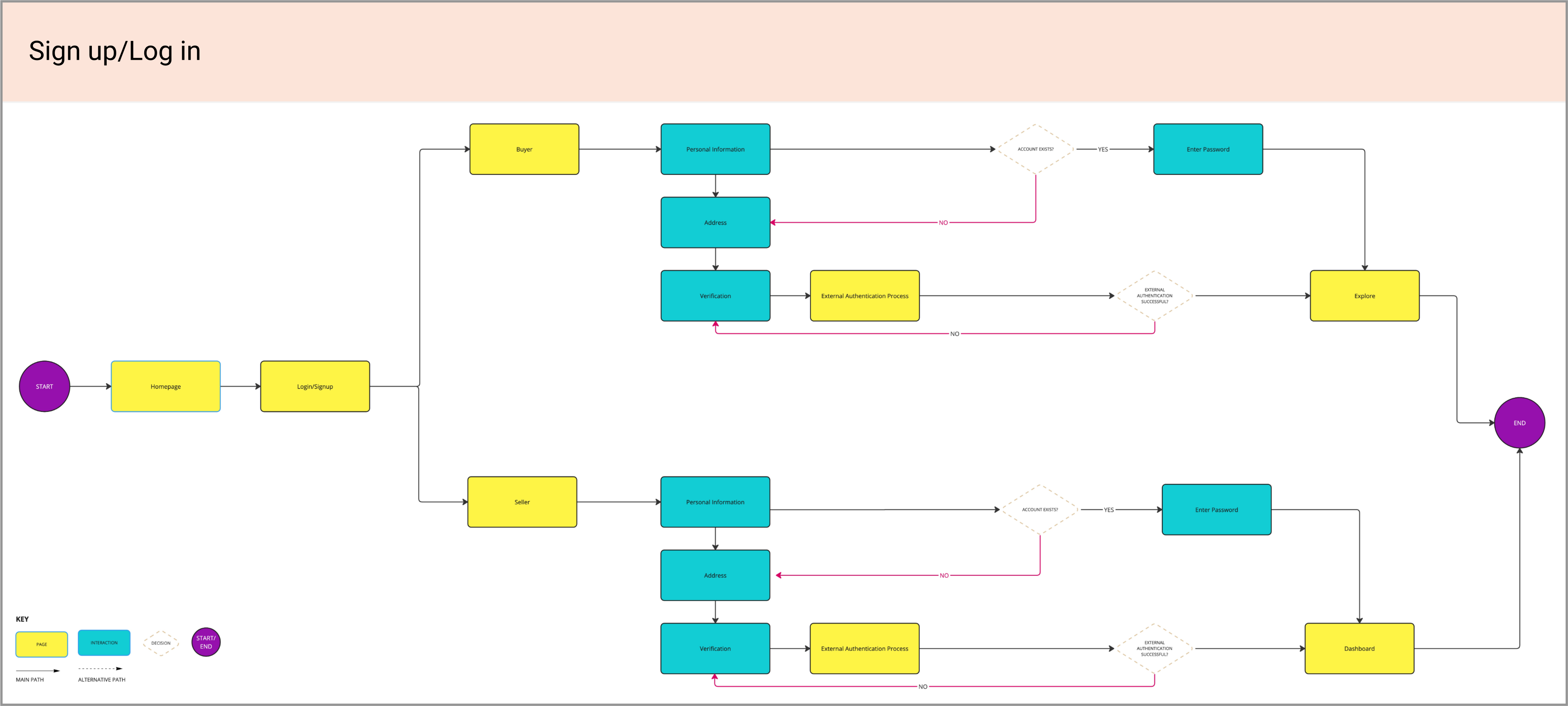
Before creating low-fidelity wireframes, I defined the core user flows to map how users would move through Africanvas to accomplish their primary goals. Establishing these flows early ensured alignment between user needs, feature requirements, and information architecture.
Three primary end-to-end flows were identified:
-Signup & Login – onboarding new users and enabling account access
-Buying Artwork – discovering, evaluating, and purchasing a piece of art
-Selling Artwork – uploading, managing, and listing artwork for sale
For each flow, I focused on a single, representative use case to ensure all critical steps and edge cases were considered. For both the buyer and seller journeys, I used a landscape painting as the reference artifact.
This constraint helped clarify search behavior, categorization logic, filtering, and metadata requirements within the marketplace.
Defining these flows upfront allowed me to validate task completeness, reduce friction points, and create a strong foundation for low-fidelity wireframes and subsequent UI iterations.
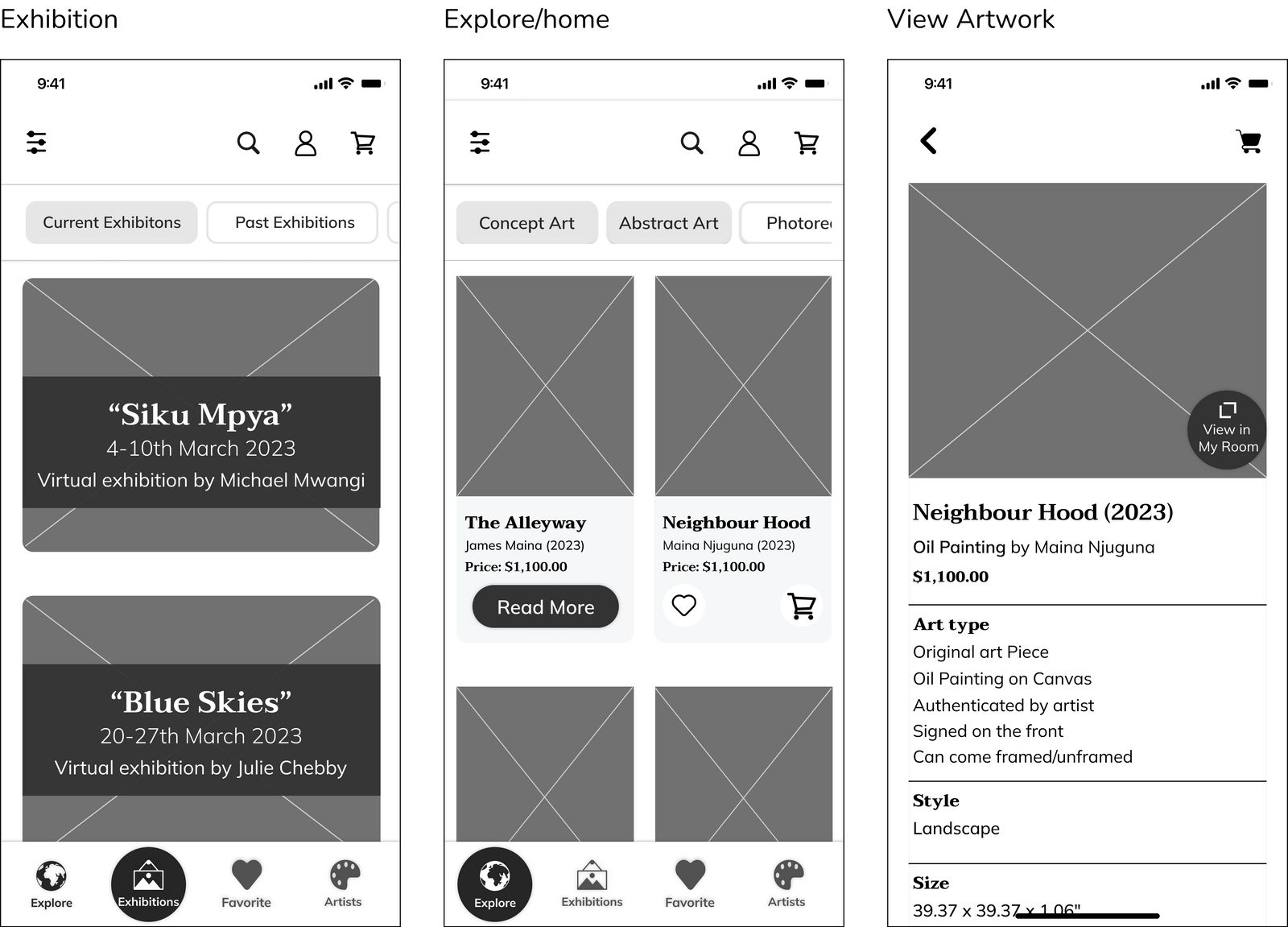
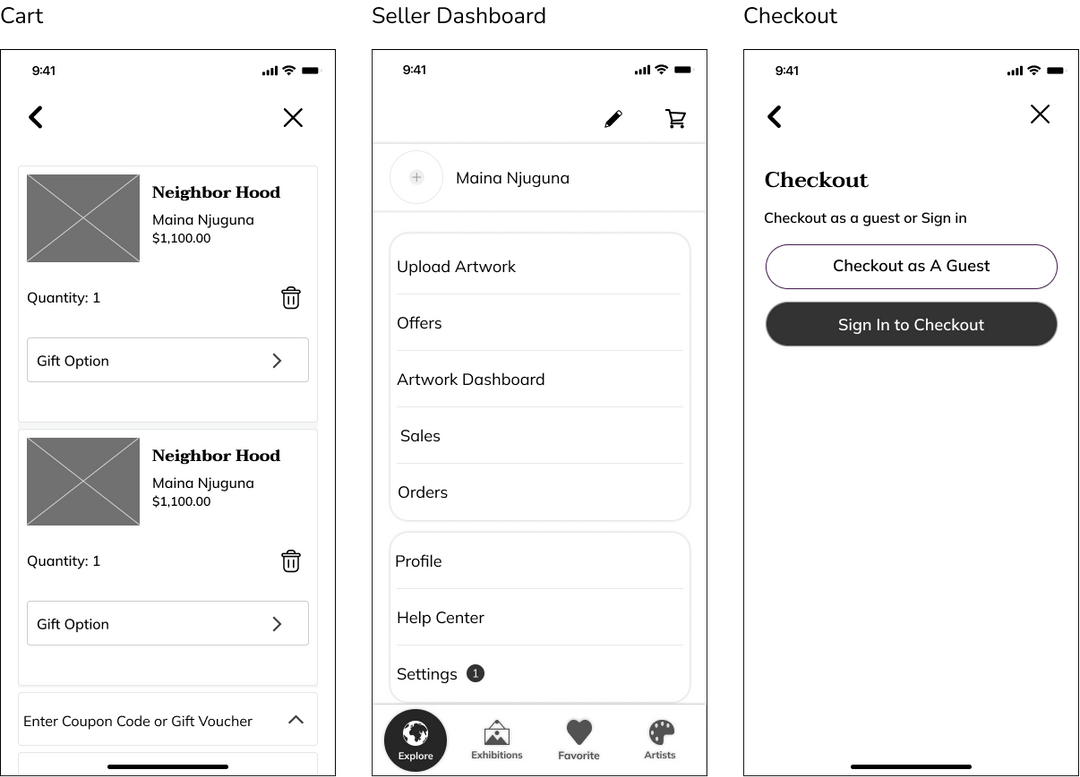
I created low-fidelity wireframes to explore layout, content hierarchy, and screen structure before introducing visual styling.
These wireframes provided a clear, lightweight representation of where content and key interactions would live across the experience.This step allowed me to:
-Validate information architecture and user flows
-Identify usability issues early, before committing to UI decisions
-Align on structure and functionality
Low-fidelity wireframes served as the foundation for iteration and informed the transition into high-fidelity designs.
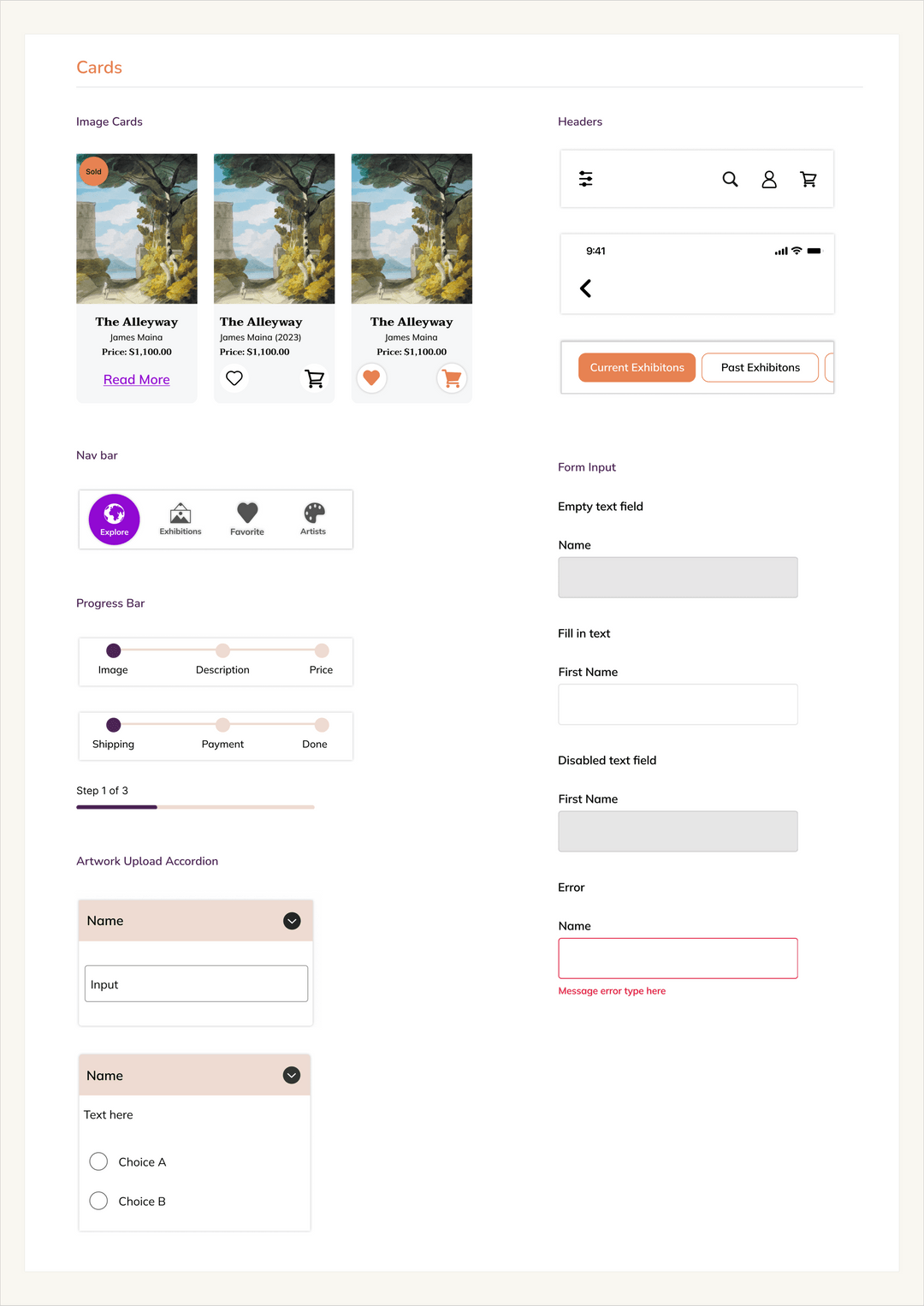
After finalizing the mid-fidelity wireframes and incorporating early feedback, I developed a style tile and core UI components to establish Africanvas’s visual foundation before moving into high-fidelity screens.
This step ensured visual consistency and allowed design decisions to be validated independently from layout.
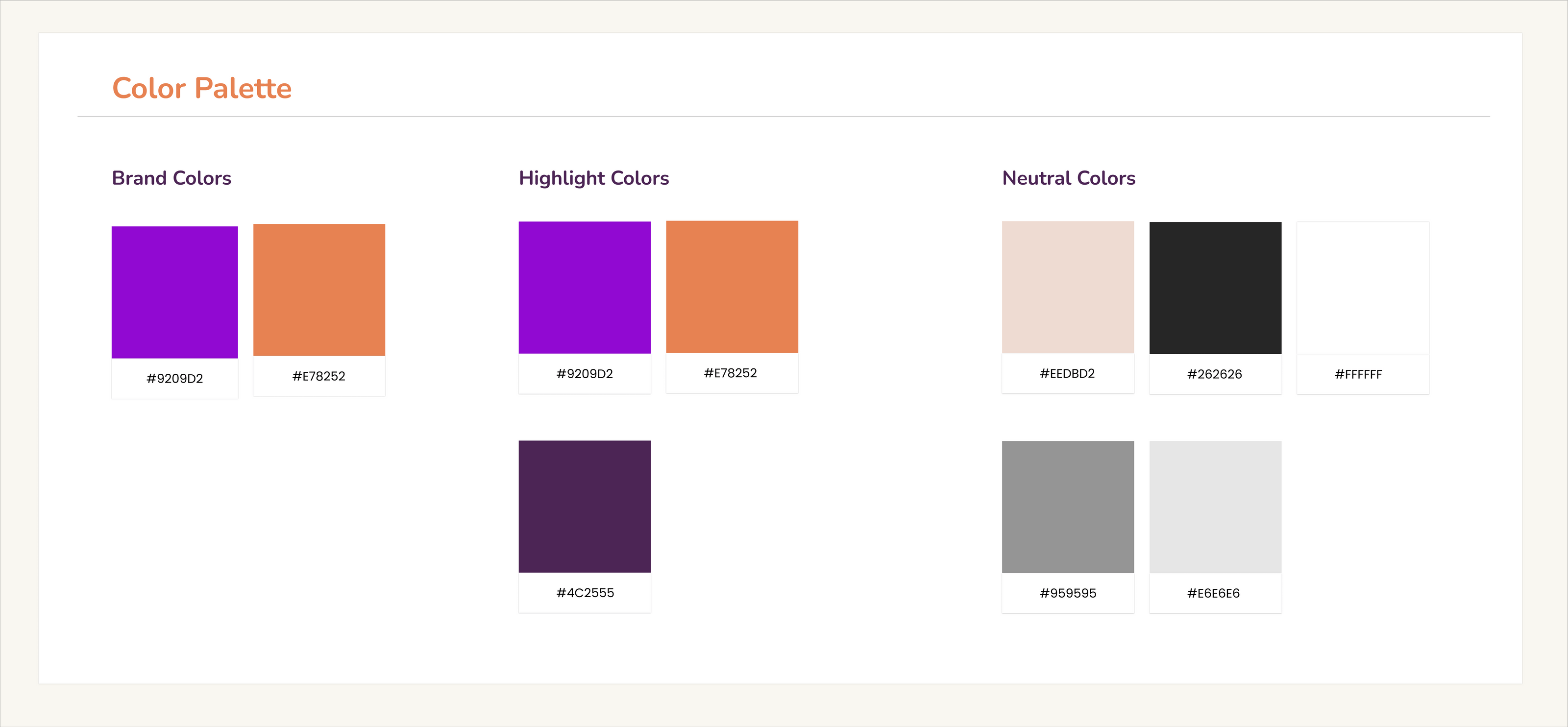
The brand palette centers around two primary colors: a vibrant purple and a burnt orange, selected to support both the emotional tone of the product and key user actions.
Burnt Orange
Orange was chosen to represent energy, warmth, and creative momentum. Within the Africanvas experience, it functions as an accent and action color—guiding attention toward interactive elements and key engagement points. Its vibrancy supports exploration and discovery, while subtly encouraging users to take action.
Purple
Purple was selected to convey creativity, sophistication, and uniqueness. It helps position Africanvas as a curated art marketplace rather than a generic e-commerce platform. The color reinforces a sense of artistic value and cultural depth, aligning with the goal of showcasing distinctive, high-quality artwork from East African artists. Purple also supports perceptions of premium craftsmanship and exclusivity, which is important when selling original art.
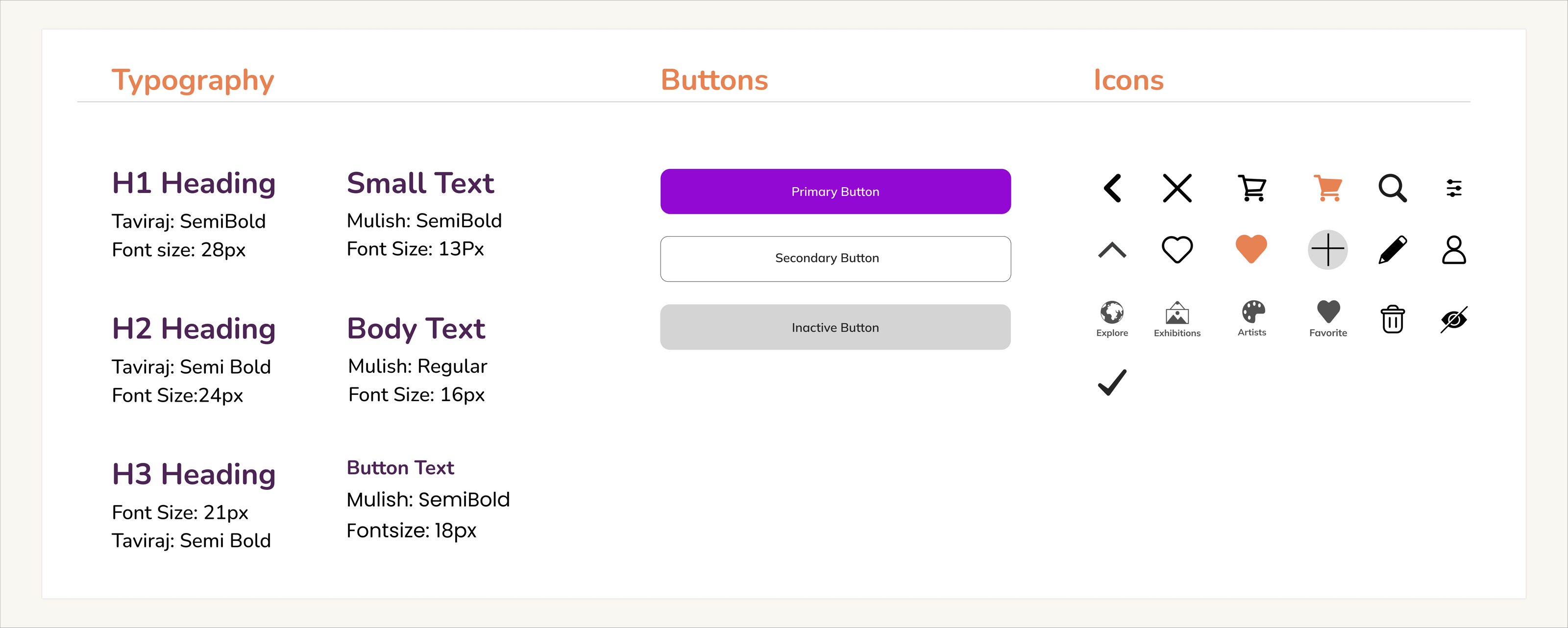
Alongside the style tile, I defined reusable UI components (buttons, cards, typography, and navigation elements) to create a scalable design system. Establishing these components early improved design efficiency, reduced visual inconsistencies, and supported faster iteration during high-fidelity design.
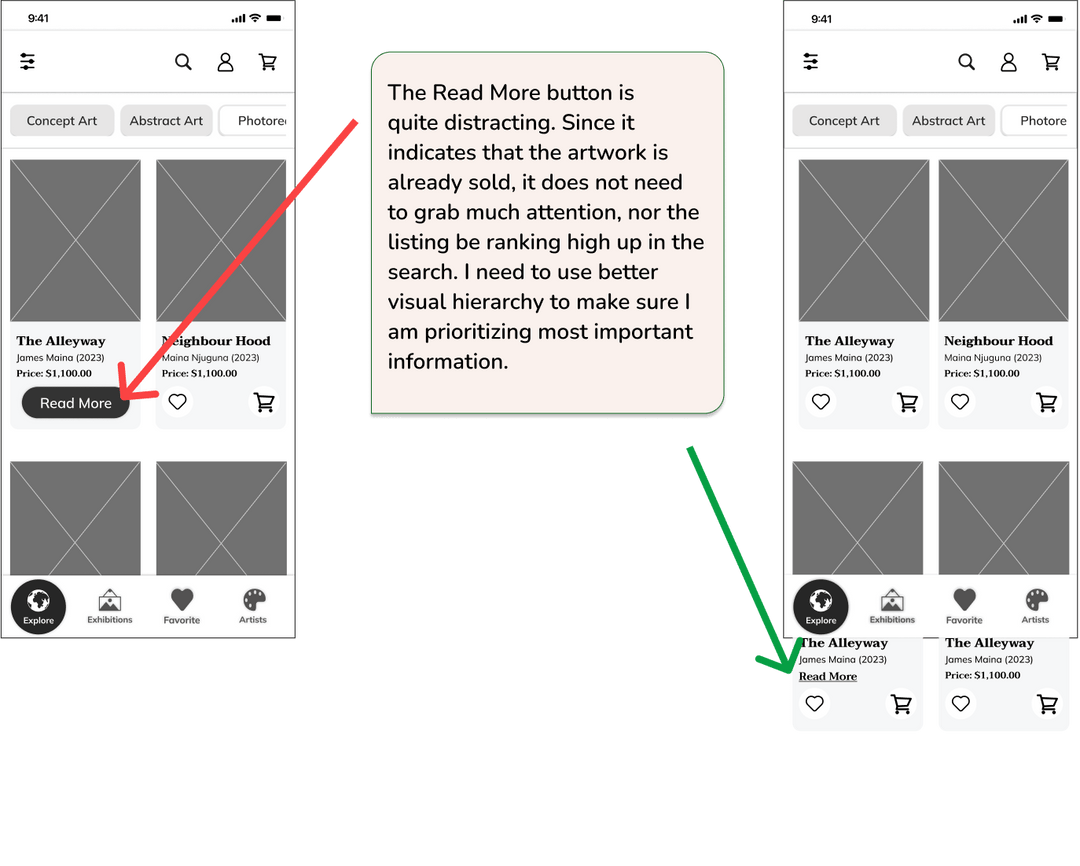
After gathering feedback from design reviews and user input, I prioritized insights based on impact and feasibility. I then iterated on the designs, refining layouts, interactions, and content hierarchy to address the most critical usability issues.
Once these changes were incorporated, I transitioned the designs into high-fidelity wireframes, applying the established visual system and UI components. This step marked the convergence of validated structure and visual design, resulting in a more polished, production-ready experience.
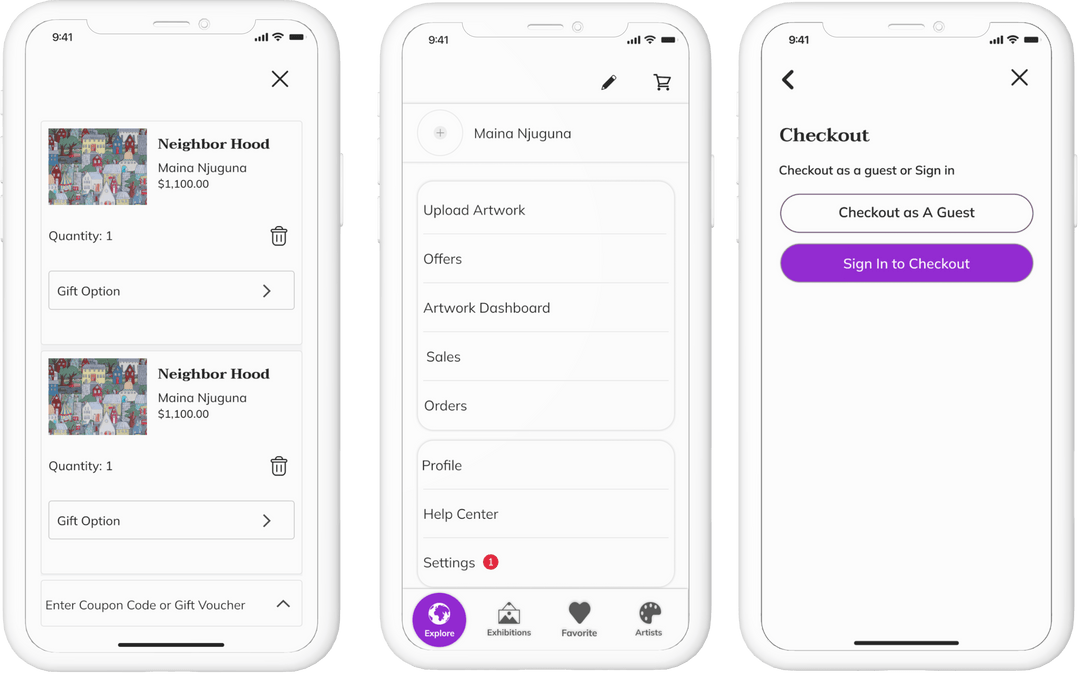
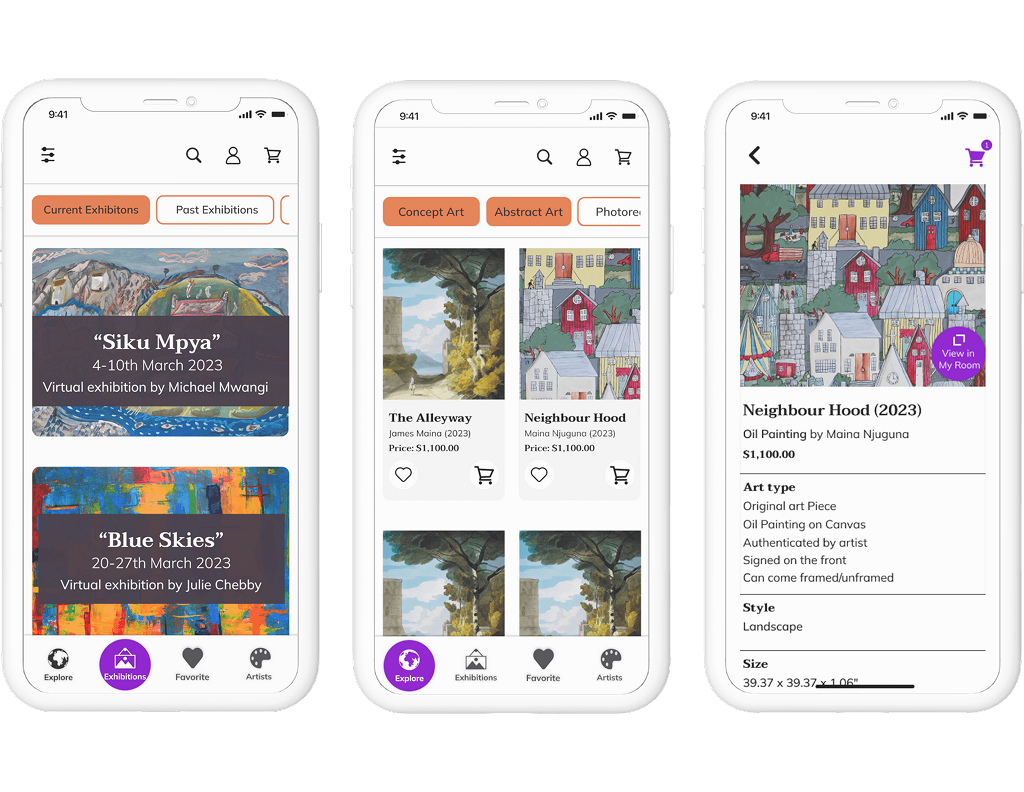
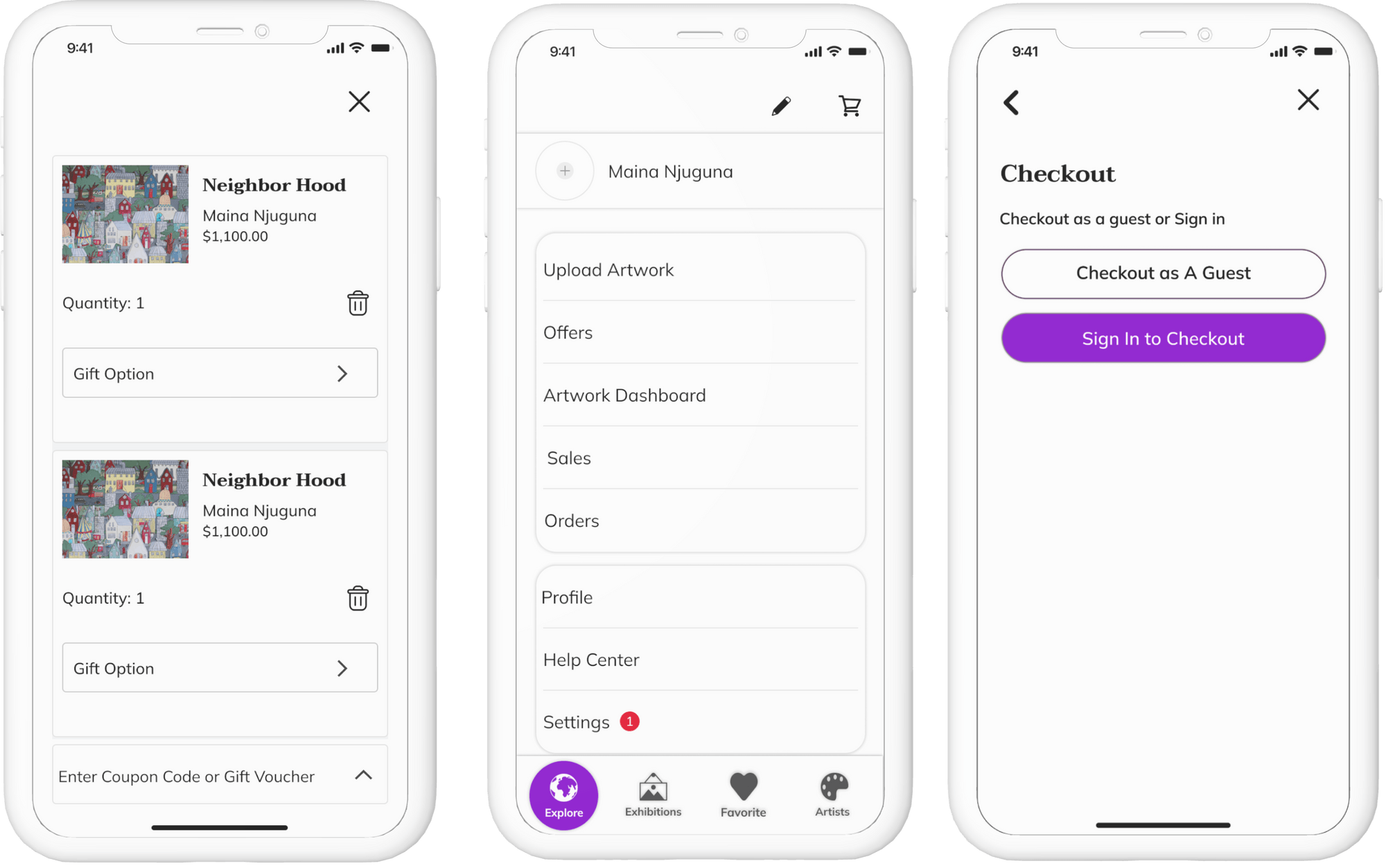
With the insights from testing and iterations incorporated, I translated the validated mid-fidelity wireframes into high-fidelity designs. This stage brought the visual identity, interaction patterns, and UI components together into polished screens that demonstrate how Africanvas would look and feel in a real product context.
The final designs reflect:
A cohesive visual language informed by research and branding decisions
Layouts optimized for clarity, accessibility, and ease of use
Screen states that support core user goals (onboarding, discovery, buying, and selling)